


PMS COMPLAINTS: WHAT REALLY HELPS
Are you one of those women who suffers from pain, cramps, mood swings or circulatory problems before every period? PMS symptoms can be very stressful for those affected - and are often underestimated. But what can you do about it?
Table of contents
Table of contents
1 What are PMS symptoms?
PMS is the abbreviation for premenstrual syndrome. It refers to various symptoms that can regularly occur in women before the onset of menstruation. The symptoms can start as early as two weeks before your period. In many cases, however, they only occur a few days before the period. The problems can persist for the first one or two days of the period, but then disappear again quickly.
It is estimated that 80 percent of women who menstruate suffer from symptoms before theirperiod1. However, the specific symptoms and their severity can vary greatly from person to person. Unfortunately, PMS is often trivialized, although it can cause a great deal of suffering for women and have a considerable impact on their everyday lives. However, a rethink is now taking place and PMS symptoms are increasingly becoming the focus of medical research.
It is estimated that 80 percent of women who menstruate suffer from symptoms before theirperiod1. However, the specific symptoms and their severity can vary greatly from person to person. Unfortunately, PMS is often trivialized, although it can cause a great deal of suffering for women and have a considerable impact on their everyday lives. However, a rethink is now taking place and PMS symptoms are increasingly becoming the focus of medical research.
2. typical PMS symptoms
Women can suffer from both physical and psychological PMS symptoms. The clinical picture can be very diverse. In total, there are over 150 different symptoms that belong to the complex of PMS symptoms.
The most common symptoms include
The most common symptoms include
- Cramps and pain in the abdomen
- Digestive problems such as diarrhea or flatulence
- nausea
- Headaches and migraines
- Circulatory problems
- Mood swings
- Irritability and nervousness
-Sleep disorders
- Depressive moods
- Skin blemishes
- Water retention
If the psychological symptoms are particularly severe, this is also referred to as PMDS (premenstrual dysphoric disorder). Women affected by PMDS symptoms can experience a significant reduction in their performance and their professional and social life. PMS symptoms only stop completely after the menopause, when women no longer have periods. However, the symptoms can be alleviated with various treatment options.
3. causes of premenstrual syndrome
The existence of PMS symptoms is undisputed - but the exact causes have not been sufficiently researched. Scientists suspect that hormonal fluctuations during the menstrual cycle - particularly oestrogen and progesterone - are partly responsible. There also appear to be risk factors that can make the symptoms more likely to occur or exacerbate them. These risk factors include a family history, stress, poor diet and an unhealthy lifestyle.
Scientists have also discovered that many women who suffer from PMS symptoms have low serotonin levels. However, further research is still needed to determine the connection between this observation. However, studies have shown that treatment with serotonin reuptake inhibitors (SSRIs) has beensuccessful2. However, these drugs have relatively frequent side effects such as dizziness, headaches, nausea, fatigue or insomnia.
Scientists have also discovered that many women who suffer from PMS symptoms have low serotonin levels. However, further research is still needed to determine the connection between this observation. However, studies have shown that treatment with serotonin reuptake inhibitors (SSRIs) has beensuccessful2. However, these drugs have relatively frequent side effects such as dizziness, headaches, nausea, fatigue or insomnia.
4 Course of premenstrual syndrome
PMS symptoms only occur in the second half of the cycle, i.e. after ovulation. Typically, the symptoms begin ten to 14 days before the period, but they can also start later. They usually become more severe the closer you get to your period. They are often at their worst on the last few days before menstruation and disappear on their own on the first or second day of bleeding. According to observations, women over the age of 30 are particularly affected by PMS symptoms.
5 Treatment of PMS symptoms
PMS is not a classic disease that can be cured with therapy. The complex symptoms are presumably triggered by hormonal fluctuations and are usually treated symptomatically. For example, painkillers and antispasmodic medication can be used to relieve abdominal pain and headaches.
Psychotherapy or antidepressants can be prescribed for severe mental disorders. However, the latter often have severe side effects. It is often helpful for those affected to keep a diary of symptoms and cycles. This allows conclusions to be drawn about the phase of the cycle in which problems occur and which hormones may be triggering them. There are also various apps available today that can help with documentation and analysis.
It is generally recommended that women with PMS symptoms avoid stress, refrain from smoking and alcohol, get plenty of sleep and make sure they get enough exercise and eat a healthy diet. For some women, pelvic floor exercises help to relieve the cramp-like pain. Relaxation exercises and hot water bottles can also alleviate the symptoms.
Psychotherapy or antidepressants can be prescribed for severe mental disorders. However, the latter often have severe side effects. It is often helpful for those affected to keep a diary of symptoms and cycles. This allows conclusions to be drawn about the phase of the cycle in which problems occur and which hormones may be triggering them. There are also various apps available today that can help with documentation and analysis.
It is generally recommended that women with PMS symptoms avoid stress, refrain from smoking and alcohol, get plenty of sleep and make sure they get enough exercise and eat a healthy diet. For some women, pelvic floor exercises help to relieve the cramp-like pain. Relaxation exercises and hot water bottles can also alleviate the symptoms.
6. dietary supplements against PMS
Natural plant substances, vitamins and minerals can support the well-being of PMS symptoms in a natural way - without any hormones. For example, studies suggest that calcium, magnesium, vitamin D and vitamin B63 as well as omega-3 fatty acids can have a positive effect on symptoms. A targeted intake of nutrients can therefore help to alleviate symptoms4. St. John's wort can be helpful for mild depressive moods.
The natural helpers also include:
Vitamin C and African black bean to support the nerves
The natural helpers also include:
Vitamin C and African black bean to support the nerves
Vitamin B6 for natural hormone regulation
Zinc to support healthy skin
Monk's pepper, cinquefoil and lady's mantle for normal well-being
Lemon balm for relaxation and a good night's sleep
Vervain to support intestinal function
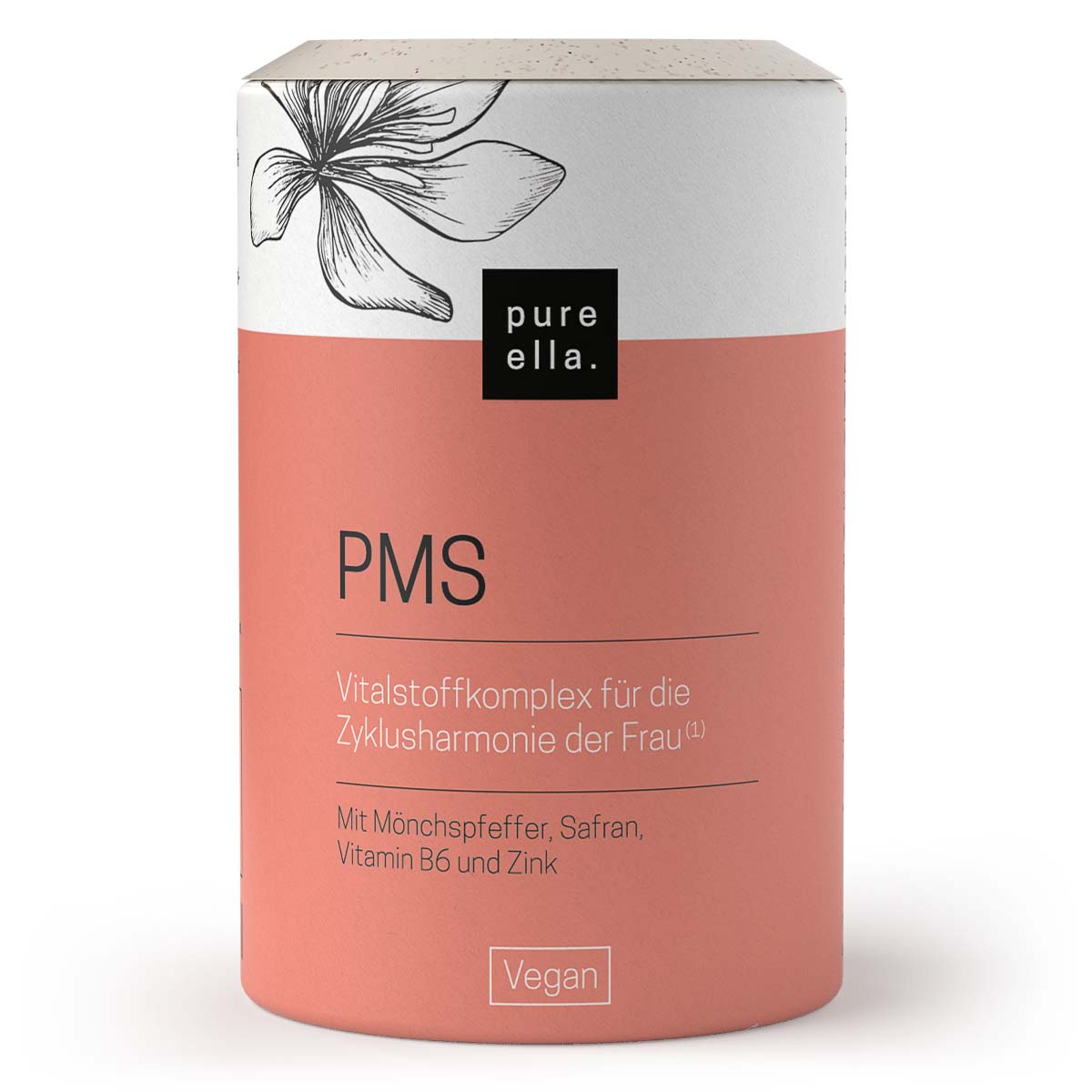
Our recommendation
- Feel good before & during your period
- 100% hormone-free & vegan
- 8 out of 10 women are convinced
Conclusion: This helps with PMS symptoms
PMS refers to a complex of symptoms that many women suffer from before their period. The causes presumably lie in hormonal fluctuations. However, relaxation techniques, strengthening the pelvic floor muscles, exercise, sufficient sleep, a healthy diet and gentle vital substance complexes can often alleviate PMS symptoms and support well-being before your period.
Sources:
1https://www.netdoktor.de/krankheiten/pms/
2https://www.deutsche-apotheker-zeitung.de/daz-az/2001/daz-24-2001/uid-878
3https://link.springer.com/article/10.1007/s10304-008-0260-y
4https://www.canterbury.ac.nz/news/2020/uc-study-supports-use-of-nutrients-in-treatment-of-pms.html
1https://www.netdoktor.de/krankheiten/pms/
2https://www.deutsche-apotheker-zeitung.de/daz-az/2001/daz-24-2001/uid-878
3https://link.springer.com/article/10.1007/s10304-008-0260-y
4https://www.canterbury.ac.nz/news/2020/uc-study-supports-use-of-nutrients-in-treatment-of-pms.html